Ursula Rucker Speaks with MundoVibe’s John C. Tripp on Her Fifth Recording, “She Said”
As a poet and performance artist, Ursula Rucker has enchanted critics and fans across the globe with her diverse repertoire, captivating vocals and accessible poetic verse. Her fifth live studio album, She Said, is an organic live recording with a full band showcasing Ursula’s diverse and complex artistry across many styles. This is Ursula’s first recording to feature a live in the studio session and focuses on Ursula’s well-honed skill and prowess as an improv vocalist. MundoVibe.com’s John C. Tripp interviewed Ursula from her Philly base.
A Mundovibe exclusive interview with Silhouette Brown vocalist Lady Alma
Lady Alma performs with Mark de Clive Lowe
After half a decade, Silhouette Brown – the original production and songwriting team of vocalist Bembe Segue, Kaidi Tatham (Agent K / Bugz In The Attic) and Dego (2000black / 4hero / dkd) – return with their aptly titled sophomore album, two. Silhouette Brown’s second LP two features the unmistakable vocal sounds of Philadelphia’s Lady Alma who has appeared on countless club classics from Sylk130′s “When the Funk Hits The Fan” to Soul Dahmma’s “Happy” and 4hero’s “Hold it Down”. Soaring with a distinctive soulful voice from start to finish, showing all her versatility and warm spirit, Lady Alma delivers two into a relaxed head-nod-soul experience.
Alma’s distinctive soulful voice brings a vivacious energy to the various sounds introduced in the album. With two, Silhouette Brown guides us toward a new dimension of modern soul music with a distinctively London-esque flair. It conveys a touch of melancholy in tone through contemplative yet hopeful lyrics and just enough groove for those looking for that “je ne sais quoi” in their regular dosage of Jazz and Nu soul.
“Get With It” is a hip-hop song featuring Brand Nubian’s Sadat X, which talks about uniting and progressing. “Leave A Note” talks about suicide, while “Hear Them Often Say” is about having faith. Another instant hit is the collaboration with M.D Akwasi on “Strawberries in Vinegar,” which is a guaranteed boogie anthem. Silhouette Brown’s extremely skillful production team pushes a warm, sumptuous melody, which delivers groove in a way only they know how. This group of extra-ordinary artists created two, which is the musical product of their skills and talents.
Mundovibe: It’s an honor to speak to you, I give you big respect. I’ve been a fan of y0ur contributions going way back to, of course, King Britt and I’m a big fan of the EP you did with Mark de Clive-Lowe and your work with 4 Hero. Big respect.
Lady Alma: Thank you very much.
MV: So, let’s go right into this new Silhouette Brown and my first question is, how you became the vocalist on this recording.
LA: Well, I’m friends with all three of the creators of Silhouette Brown, which is “Dego” McFarlane, Kaidi Tatham and Bembe Segue and I knew about the first Silhouette Brown. I’m a fan of those three cats so I was already in on it, but I did not know that I was going to be a part of Silhouette Brown until the later part of 2008 when Dego started talking about it. We stated recording in February of 2009 and now here we go.
MV: Yeah, well it’s exciting because you’ve got a history with those guys and, of course, ‘Hold It Down’ was such a phenomenal track so this is kind of a bearing the full fruit of that collaboration I would say.
LA: Yeah, I think so. I’ve had the opportunity of performing with Kaidi and Bembe on stage and working with Dego in the studio. So, for me it was an honor for it to happen. That they even considered me as pulling it off: it’s five years in the making so I’m very honored to be the one on the next installment.
MV: So, how do you describe Silhouette Brown?
LA: Definitely different from the first installment. Dego is now living here in the States, so it’s a little more States friendly. He and Kaidi are very complex with their drum patterns and what they lay down and I think him being here kind of Americanized the sound of Silhouette Brown to make it more American friendly. More boombap beats and more just laid-back, grown folk &B tracks with some heavy contemporary gospel influence chords played by both Dego and Kaidi. So, it’s definitely different from the first installment.
MV: And, of course, five years ago was kind of the peak of the “broken beat” sound, so they’ve clearly evolved and matured and I’m sure you have to.
LA: Oh, yes. It was such a challenge doing this album. But I appreciate the growth of my craft from it.
MV: Well, you come from a long, long background — I watched the documentary on your career, which stretches all the way to being a child. That’s phenomenal. I know that you came up with the church choir but wow did you end up with your style that you have now?
LA: I would like to say how it evolved to where it is now: it definitely has to do with the church but more, even more that my mom had me in music school, going for music/academics with GAP, which was my day school. And she also had me in after school activities at Settlement so, even though my background was classical it kind of helped me to mesh so many different genres of music that I was learning to develop the style that I have now. I’ve always sang, from age 3 all the way up to now. So, I think just being around different entertainers, my friends that are also in the music business. Being influenced by all of this different music that I’ve been exposed to, whether it’s been personal or professional I just think that everybody has had a part in making my sound what it is now.
MV: And how much of that is part of the whole “Philly Soul” kind of thing?
LA: Oh, I would say it has to be at least 60 percent. I have a lot of friends in the business like my cousin is Jaguar Wright and I’ve watched her perform. And Asia from Kindred and even Jazmine Sullivan. Marsha Ambrosius from Floetry and all these ladies and even some guys and even the old classics like
Diana Reeves and Dinah Washington and Martha Reeves: all of those cats are what has brought my sound to the forefront as Lady Alma. I’ve been influenced by a lot of vocalists and I try to take a little piece of something from each one, and not try to copy. They’re successful in their own right so noone wants another one. If anything you should be able to take something and evolve it and I think that’s what has happened. But I thank all of those people, even the producers that I’ve worked with, I’ve noticed that the notes that I choose become more complex because they’re complex. Everybody influences me.
MV: You hooked up with King Britt and you attribute him to launching your career to some degree.
LA: I’m very proud of King, King is like my brother number one. And it started out as an admirer to the admiree. You know, he was a DJ at Silk City. I just used to enjoy the music with the live element they had. My and my girlfriend, who was actually my partner in the early Sylk 130 recordings, used to go out on those Monday and Saturday nights and I would get so moved by the music that was spinning because it was at a time where top 40 music was really taking over and you wished you could get a little bit of the grown folk music that you were brought up on. So, that’s what these cats used to spin — not only that but I’m a lover of house music. So, that’s how it came to be, just kept going out and one day me and Tandy was just in the middle of the club singing and they couldn’t believe it.King heard us over the top of all this stuff and was like, ‘Oh my God I’ve gotta work with those girls.’ And Tandy knew King already prior to us working so I was introduced to him and from there it’s where it is now. And I do attribute and I have to say if it wasn’t for God first, bringing me to Tandy and her bringing me to the club to meet King I probably would be at my regular 9-5 helping doctors fit patients for lenses.
Silhouette Brown release 2
MV: You definitely like to collaborate with people: how did that process work with Silhouette Brown?
LA: Well, I was only working with one person as far as the music production part of it. But I had worked before I worked with all of those cats prior to this project, in some form. So, it wasn’t too difficult.
MV: Were the lyrics your collaboration?
LA: Nooo, the only thing you are getting from me is vocal arrangement. A lot of the lyrial content was written by Bembe or Dego. That’s why I said earlier that it was a challenge, because I didn’t write any of the lyrics and to bring what they heard, as far as to them what they’re interpretation of their songs would be for me to give them what they want, that was a big challenge. Good thing I personally do know them and know how they like things and what they would do as the artist. Like, when Dego was being Dego the artist I know what he wants. When Kaidi, as madd as he is with all that talent, I know what he likes to hear from just working with him in the studio. And then being onstage with Bembe, I know where she goes. She’s so uninhibited, she can take a song with no lyrics and you’ll think it’s lyrics the way she does things. So, I tried to like put myself in those positions and then bring Alma, the sound that they want. That was such a challenge but I grew so because I allowed myself to just rest in my vocals and let someone do something else.
MV: That would be very challenging I would imagine. Especially, there’s some pretty heavy — it’s kind of emotional, some of the lyrics. Some heavy, adult topics in there.
LA: Yeah, it is. And it’s funny actually, I’m not ashamed, there’s a few songs where you’d have thought I wrote them because they really were personal tunes. Actually two of the songs, and I’m getting a little choked up right now, but ‘Casualties of Honey’. Well, I broke up with my boyfriend about the time that we started recording and ‘Leave a Note’. I had contemplated last year of leaving a note, and that can be on record I’m not ashamed, I’m doing much better right now. I think the mere fact of just finishing this group of work has helped me to heal a whole a lot. And I also seek through my pastor at church for spiritual guidance now. A couple of songs there are verrry personal so if they sound as if I wrote them or some sort or I’ve experienced them it’s because I have.
MV: Well, you definitely did put that into the songs because you interpreted them very well and I listen very closely to the lyrics, one which grabbed me was ‘I want to dream forever and rest my head in a pool of red’. That’s heavy stuff and we all go through these moments where were just wondering, especially these days. But I don’t want to get all heavy here because it’s really uplifting music.
LA: Oh, yeah. Because on the flip side, I got my healing from this album. The good part is that I was healed through this body of music and lyrical content that has substance. And it really caused me to just reflect on my life and if I had, even going through all my down stuff, if I had a chance to live my life differently or do it again I’d do it the same way.
MV: I listened to all of the tracks, I didn’t get to listen to the full length of them because it’s not out yet, but it was really resonating, it really sounded great. Now I understand why it has a different flavor to it because as you said, it’s more accessible to American ears. Now, how are you going to interpret this live?
LA: Oh yeah, we’re getting ready to start rehearsals and I’m so, so excited. My personal keyboard player who plays in my band has been pulled into the Silhouette Brown family and I know that Dego is going to get Kaidi over for some of the shows so he’ll be playing as well. So, I’m really excited because all three of those cats are sick, madd musicians and I know just those three right there is enoght that it will be mind blowing. It will be new and different because as a collective group we haven’t worked together in that sense. So, the first couple of shows might be rough but after that please. Actually I think from the first show to the last show it’s going to be something new every time.
MV: And you’re know for just taking over and giving everybody that uplift and your live show is supposed to be phenomenal. Tell me about some of the recent live work you’ve done.
LA: Actually, I just got back from LA. A girlfriend of mine, Felicia (the Poetess) Morris, her dad has been in radio for 45 years and that is a milestone because if you last 45 minutes you’re doing well. But they had a benefit concert for him at the Congo Room, which is Sheila E’s club, and my girlfriend works for Jamie Fox on his radio station the Foxhole. I was performing last Monday at the Congo Room and Jamie Fox came up and sang with me. I got to meet and see Mr. Stevie Wonder, Lenny Williams, some great, great talent. It was really a good event. Before then I would have to say, I did something local and I did a gig at S.O.B.’s in New York for my friend Manchild Black, he has a party called Soul Ascension and I did it with DJ Mr. V and it was dope because it ended my whole trip, I’d been in Atlanta with DJ Kemit. I don’t know if a lot of people know who he is but he’s the DJ for Arrested Development and who went on to work with a lot of great people who also was the resident DJ of this big party in Atlanta that happens every three months called the Fall Jazz. And he brings in some heavy cats, the whole idea of this even is you never know — people fly into Atlanta from all over for this event. Me and Kemit did a track for his album called ‘You Don’t Know’ and that’s dope. So it started in Atlanta and then I went to LA and made some connects out there and came home and then headed up to New York. And it was freezing, but the hottest night ever.
MV: SOB’s a nice room too.
LA: Oh, yes it is. People in New York came out and showed their love. It was freezing cold but I’m serious, there was a lot of people that came out and showed their love. In those nine days I had I would have loved to stay out in LA and attend some Grammy parties but I had work to do.
MV: It’s good to hear that you’re playing out in different cities. A final question: do you see Silhouette Brown blowing up the spot in the States and worldwide.
LA: I see Silhouette Brown really impacting people who have not been impacted by grown folk music. I see people being introduced to it and I see it breaking some gaps that we have. I’d like to see Silhouette Brown for a while, for a long time. I feel that it’s going to catapult me for the other things that I have in the works. And I’m forever grateful to those three for even considering and then choosing me. I see longevity for Silhouette Brown, here and worldwide.
Any serious underground beat junkie of the past decade has heard Moonstarr’s now-classic “Dupont” as well as his long list of remixes for such labels as Compost, Sonar Kollektiv, Jazzanova, Do Right! Music. The fact is, even though his demeanor is completely low-key, Moonstarr is one busy and prolific cat. While maintaining a full-time job as a technician, he’s holding things down on the business end for his Public Transit Recordings (PTR) record label, breaking beats live on the P.A. and hunkering down with synths, drum machines, and samplers to bang out mind-melding beats for his appreciative global audience.
Moonstarr’s “Dupont”
Moonstarr’s musical history encompasses the entire recent history of modern urban music, stretching from hip hop to drum’n’bass to broken beat and also including some goofball humor. Citing musical influences as diverse as Underground Resistance, DJ Premier, Baden Powell, Zakhir Hussein and Sun Ra, Moonstarr’s sound has continuously evolved as he’s journeyed both literally and figuratively. His collaborations reflect his diverse influences: projects for indie soul, electronic, and jazz heavyweights such as Jazzanova, Recloose, and 4Hero. In the process, Moonstarr has gained worldwide acclaim for his music.
Besides running Public Transit Recordings, the label he co-founded with Dialect (Mano Narayanan) in 1998, Moonstarr is busy playing shows and rocking dancefloors in Berlin to Tokyo to Puerto Rico to all points in between. His trademark live performances have graced London UK’s legendary CO-OP club night, Montreal’s MUTEK Fest, San Francisco’s BetaLounge, and the Andy Warhol Museum in Pittsburgh.
In 2010 Moonstarr is back with a vengeance. After a long minute making beats for other peeps like Voice, LAL, Daedelus, DJ Kentaro, Zero DB and scoring music for film (cult hit film Next: A Primer On Urban Painting), our man heeded the calls and poured energies into his latest album, Instrumentals Forever, his second full-length release on Public Transit Recordings. To say this is a highly anticipated record is an understatement, given the worldwide rounds and critical acclaim that followed his bossabreakbeat and synth-infused debut album Dupont earlier this century. On this latest outing, Moonstarr effortlessly melds the sonic spaces between hiphop, techno and bossa-jazz with that classic Moonstarr drumbreak swing programming. Not one to shy away from being a bit cheeky, Instrumentals Forever is a slight play on words with tracks featuring vocal collaborations with bossa soul crooner Sarah Linhares, political dub soul collective LAL, Montreal hip hop luminary Lotus Jai Nitai and jazz-inflected Toronto hip hop fams Fineprint. In addition to this full length, Moonstarr release a 7″ called Farfisa 45, featuring Tony Ezzy on the Farfisa Organ. The songs pay homage to great Brazilian organists like Walter Wanderley and Ed Lincon. Featuring dirty drum breaks and samples played by Moonstarr and jazzy Farfisa Organ work by Tony Ezzy. So, if you’ve been sleeping on Moonstarr it’s time to time to tune back in: he may take his time but at 33 this cat has a few years ahead of him.
Mundovibe spoke with Moonstarr on his past, present and future:
MV: I’ve been listening to your music and your remixes for a number of years and you’re clearly somebody who I respect and I enjoy following. Let’s go back to the beginnings: what scene did you tap into or come out of? Give me some history on the Toronto scene.
KM: When I was growing up I was hugely influenced by college radio. Stations like CKLN, CIUT in Toronto, even commercial radio back then was really great to listen to as a kid growing up. There was a lot of stuff going on at that time on the radio. I’m 33 so my golden years were early 90s: early hip hop but also going to raves at the same time and a really solid house scene in Toronto was going on back then. So, I was just influenced by all of these angles. Radio in particular had a huge force in determining my future, in shaping my future. Because not only the music, I was also getting into news, politics and just hearing really far out ideas and radio art, radio news and all different types of musical genres too.
“It was really amazing to follow those guys into a whole new musical genre. They were taking all of the elements of house and techno and all of the drum programming from drum & bass and bringing that into broken beat.”
So, it was natural for me when I started to DJ to be interested in trying to find all different types. But I kind of was limiting myself to drum’n’bass and hip hop and also techno. Those are the three main genres that I kept sticking to but there’s so many sub-genres in those musical cultures that kicked off. I was really into the drum’n’bass community in the early ‘90s: Reinforced records had a huge influence on me and then later on to follow all those producers as they started making broken beat, people like Dego and Marc Mac (4 Hero), Somatic. It was really amazing to follow those guys into a whole new musical genre. They were taking all of the elements of house and techno and all of the drum programming from drum & bass and bringing that into broken beat.
So, in the late ‘90s my sound started to mature more and I had circulated enough demo tapes to my friends to build the confidence to release my own stuff I started a label called Public Transit Recordings. That was in 1998 and at that time too we were living in an area of Toronto that was close to the University of Toronto and I was rooming with some friends that were going to university and we were throwing parties at our house and we got tired of cleaning up after, so we decided to throw a party at a venue and we invited all our friends and all our DJ friends. It was a huge mix of genres: we had house DJs on the top floor and MC performances in the basement and we called our friends up, from the Elemental crew in Columbus (Ohio): Charles Monochrome, Arktyp and they brought this mid-Western American thing into the mix. We also started the label with that first party and we released a compilation called “Code 416” that featured some of the artists that were performing. After that we started to grow outside of Toronto by promoting ourselves through the DJs that were coming into the city. And also connecting with old friends like people are Reinforced. We would send promos and they would help distribute them around.
MV: The community from that era was so tight and so into helping each other.
KM: You really had to rely on other people because the internet was just coming up. In the ‘90s it was all about passing tapes and CDs around. I remember the first CD burner I bought was 400 bucks and it only burned at 8X so you’d have to start planning on Monday or Tuesday how many CDs you were going to get rid of on the weekend to all of the DJs that were coming in from out of town and start burning then. So, you really had to rely on people to help you out and it still happens today but it’s just in a different context. Today you can do a lot more yourself, in terms of online promotion. You still have to rely on other people to “retweet”, you know what I mean? But back then it was really physical, you had to hope that the five CDs that you gave to a friend in another country would be distributed to the five other people, you know? Where nowadays it’s easier to forward five retweets then five real CDs or tapes.
MV: You essentially got into music and production as a teenager?
KM: Yeah. I was the youngest of four so there was music in the house in the ‘80s for sure, like Billy Idol, Michael Jackson, there was always music there and I think that helped me when it came to wanting to get my own music. I remember my sisters driving to the mall to get records when I was eleven and twelve and I was buying INXS records and shit like that. So, when it came to the point where I was able to take the bus and go downtown in Toronto and go to the record stores, I was ready to start buying every single hip hop record that came out and we used to fight for records on Thursdays at this store called Play de Record in Toronto. It was the spot where everyone would get together and the newest releases would come out. There was DJs playing the music in the store and there was just a great atmosphere to grow up around and meet people. So, as a teenager I really got into it. I was driven to try and figure out how DJ Premiere chopped and sampled jazz records. I was really interested in what drum machines they were using. I’m an electronic technician, I was taking apart radios at the same time and electrocuting myself, so the technical side of the music really grabbed me. I was driven to try and figure out how they did that, and also to get my own gear as well.
“But it just built over time, over the next two years people just got into it and then other DJs started playing it and then big name DJs started playing it, people like Rainer Truby. And DJ Spinna called up my house like out of the blue and I was like ‘who is this?’ “
MV: Once you did those two things, figuring out how they did it and what their techniques were and got they gear, where did your signature sound come out of that, your sound?
KM: Shit, I still try and define it today like ‘what is my sound’ but people tend to hear it in music I put out and I think it has to do with a really lo-fi aesthetic and also a DIY aesthetic, just making do with the gear that you have, whether it’s a lot of the early stuff that we did on tape so if there’s hiss or if your sampler only had 5 seconds of memory and you’re stretching it by sampling at 45 and doing all sorts of crazy shit, I think that really defines my sound and what I’m about. But also pushing the limits with that technology, I think that plays a big part in defining who I am.
MV: It’s pretty much beat driven music wouldn’t you say? Is that the core of it?
KM: I think so, I make a lot of other types of music too, ambient music and weird fucked up electronic music but I don’t think I’m at a point yet where I can put that stuff out on a commercial level. I might start leaking a bit more of that stuff out on a commercial scale. I might start leaking a bit more of that stuff through the new communication channels we have now like Facebook and Soundcloud. And in the past I’ve actually put those weirder tracks on demos I’ve passed around to people.Mainly,when it comes down to it, when I’m in the studio the majority of what I do is beat driven and it’s for the dancefloor, it’s for people. Because I’m a DJ at heart, I grew up DJing and I love to see my tracks in the club and being played and seeing the reactions on the dancefloor. I just enjoy that music, it’s part of who I am so it’s really easy for me to make that shit in the studio.
MV: Nice. Tell me about your first full-length, “Dupont”. What went into that?
KM: That was around 2000-2001 but there’s some songs on there that go back to 1996 I think. Tracks like ‘Dust’, very older tracks.I had gotten to a point where when we started the label it wasn’t about me, it was about the community that was happening at that time and it was about my friends. It was about me, I put four of my tracks on the first compilation and it’s a bit self-centered but I paid for the whole thing (laughs). But I waited a while before I actually focused on my own material and really pushed myself. So, “Dupont” was really the first big push where I could showcase my sound. It was a mix of musical genres, I wanted to highlight all the things I was into not just the one sound, the ‘dust’ sound. I was into the broken (beat) scene that was going on at the time but mixed with a bit of the techo elements. I connected with these guys in Colombus, Ohio – the Elemental Crew that I mentioned before – and there’s Dave Cooper in Toronto who introduced me to Detroit.
And we would go to Detroit a lot and I went to Submerge and I met Mike Banks and a lot of people down there and was hugely influenced by that sound. So, it came through on “Dupont” – I wanted to showcase that. But I also wanted to keep it light hearted hence all of the funny messages I was getting on my phone. And I wanted to put Toronto on the map too. I really wanted to showcase the Toronto transit system in particular like Dupont Station and the forward thinking architecture that went behind the actual building of that station. It was a mix of ideas but I think it came together pretty well. Originally we just put it out on 12”, it was a double vinyl and the initial sales were really low, like 100 copies. But it just built over time, over the next two years people just got into it and then other DJs started playing it and then big name DJs started playing it, people like Rainer Truby. And DJ Spinna called up my house like out of the blue and I was like ‘who is this?’ you know? Weird shit started happening like that – Gilles Peterson started playing it. So, it was fun man. That record, you just made it with an idea, a concept, and hoped that it would go somewhere and it did, it helped me out a lot.
MV: So that put you on the international map?
KM: Yeah, at that time I was working with Dave Cooper in Toronto, who started a community-based distribution company and the idea was he was going to get all of the hottest labels in Toronto. And there were a couple other labels outside of Toronto involved too. And he was going to distribute them to other distributors. And one of the distributors that picked up on our stuff was Goya in the UK and they took a couple boxes and that helped out a lot because Goya at that time was really hot. A lot of people were checking out Goya for all the broken shit that was coming out and some people picked up on our stuff and we ended up re-pressing that record twice. I think we did probably 3,500 copies of that 12”. And it was a double 12”, there’s no way in hell we could do that these days. Nobody’s buying vinyl like that anymore. It was a lot of fun, it still is. We just cut my first 45 and I don’t know why it’s taken so long to do this but to put it on the turntable and watch it spin is an unbelievable feeling.
MV: Vinyl’s back or what?
KM: It’s always going to be there. It is dieing off for sure. If it’s coming back, I don’t know if there’s a big regurgence, I think it’s just people are realizing – for instance Kevin Beedle, a UK DJ does a show called Mind Fluid – I’ve been listening to his show for a while and he’s started playing more and more vinyl and he talks about ‘man, I totally forgot about how this feels’. It’s a different experience when you dig through a crate and you look at the covers and stuff. I think people in the next couple of years are going to get reacquainted with that nostalgia of vinyl.
Moonstarr collaborator Sarah Linhares
MV: Who do you regularly collaborate with?
KM: I’ve been working a lot with a vocalist named Sarah Linhares in Montreal, we’re working on her full length album that’s coming out on PTR, it’s called “Messages From the Future”. I tend to collaborate with people close to me, I’m working on stuff with my girlfriend here in the studio. Stuff with friends around town , people like Tony Ezzy, he collaborated with me on my 45. So it’s pretty tightknit. I do collaborate and reach out to people over long distances, for instance Voice. I linked up with Voice, who’s from New Orleans and we ended up doing a whole record together. I didn’t produce all of the beats on her record but I kind of executive produced it and arranged other producers – people like Charles Noel who’s in New York now but whenever we can we’ll collaborate on something if we’re visiting eachother or over the net. We did called ‘Poppa Large’ that’s kind of floating around the internet. It’s a mashup of Two Man Sound, a Brazilian track that we sampled and we used Kool Keith’s ‘Poppa Large’ and put the vocals over top. So, I tend to collaborate with people close but the remixing is funny because I remember when I put out “Dupont” and maybe even earlier I called up Reinforced Records a lot in the early ‘90s and spoke to Marc Mac and Dego. I was constantly quizzing them on the gear they had and how they were chopping breaks and they gave me some crazy advice in terms of the remixing because they were doing a lot of remixes in the ‘90s and I asked them how did they get there to that point. Because remixes are a great way to generate cash to keep you going, you know? And they said ‘it just happens. People just call you up.’ It’s simply that easy, once you have your music out there people that are into your sound are going to want to feature your productions on their releases. And the remixes, you never choose to do a remix, they always ask you right? In some situations you can remix and hopefully they’ll enjoy it but the really good relationships are when people approach you and ask you to work for them. And that’s kind of how the remix thing happened for me, a lot of people just started asking me. It has slowed down a lot in the past couple of years but 2003-05 Iwas really busy.
MV: A lot with Compost records and Do Right!, right?
KM: Yeah, well John Kong, the guy that’s behind Do Right! Was based in Toronto and we were actually working together in the studio on some collaborative projects. I did a track called ‘Future Visions’ with him and a keyboardist, Jason Kenemy so when it came time for remixes for his label he asked me for somehelp and I hooked him up for a remix. But, yeah, I did a release on Compost, it was a 12” called ‘The Greed Remixes’ andit was a remix I did of one of my own tracks. But that really helped me out a lot, it was a really big 12” for me back then. And because they’re in Europe a lot of the DJs picked up on that in Europe. And then I got calls from Rush Hour to do a remix, Raw Fusion, Sonar Kollektiv. I did a release on Sonar Kollektiv as a result of the 12” on Compost.One thing led to the next. And by putting our names and contact info on the records it allowed a lot of people to get in touch with us – small record labels. There’s a lot of remixes that I’ve done that I need to put in a volume two because they never made it on volume one. Ianeq (‘The Light’) for instance is a remix I did for a small label in Switzerland (Mental Groove) and I did some work for Groovement in Portugal. They’re all in my discography but people might not hav heard of them or there’s only a limited release originally.
MV: In naming some of the projects that you were involved with, it’s really international: Portugal, Berlin, Detroit, Switzerland, Montreal. What’s next?
KM: I haven’t cracked into South America yet and the only Asian country I’ve gone into is Japan and maybe Korea, but there’s a whole other world out there that I would love to tap into and get involved with. But, in time, I’m not in a rush.
MV: Are you solidly based in Toronto, would you ever pick up like Quantic did and go down to Colombia if you had the opportunity?
KM: You know, when I was on the road in Japan and also in Europe I did some production work on the road but, I mean, Quantic’s ability to just pick up and move to Colombia and do a collaboration like that – it’s amazing. I have a bit of that bug in me but I actually haven’t been as financially rewarded as much as people may think, in terms of this. I still work, I still have a 9-to-5 and that’s a big chunk of my income you know? Being in North America I think a of of Europeans not have it easier but especially in England there’s so many more people per capita, there’s so many more people you can play to and there’s so many more people buying your stuff. I think it’s easier to be an underground musician in more condensed cities obviously. So, it’s kind of worked against me a bit but I’m not complaining at all it’s just the reality: I haven’t been afforded the luxury to take three months off and record in the jungle. (laughter). So, I guess my priorities are working with artists that are closer to me that need assistance. I really don’t mind helping people like Sarah, for example, get her full length together or Voice – she really needed to get put on the map and we wanted to get behind her album. So, it’s a very little effort that I can put to helping these people get up to where they should be, you know? And that’s kind of where my priorities are at.
New Orlean’s based hiphop artist Voice
MV: You’ve got another full-length that came out in 2009, which is “Instrumentals Forever”.
KM: That’s again another something that maybe should have come out a couple of years earlier but I got it out nonetheless and a lot of people were really happy with it. We didn’t get to distribute it as much in North America as we would have like to but we did do some vinyl and we did a lot of CDs in Japan and Europe, so hopefully people will be able to pick it up. It’s available on iTunes too and digitally at dancetracks and juno. It’s kind of an extension of “Dupont”, it was an idea I had in my mind for a while of songs in partiulcar like ‘Broken Bossa’ and ‘Clappy’ and there’s some songs I just wanted to get out. And there were other songs that just kind of fit with the mold of the record and I wanted to give something really good for out Japanese distributor to sell becaue they did a lot of great work for us in the past. I have a new record I’m working on called “Ill Harmonics” and it features more of the techier sounds thatI’m into. Hopefully we’ll be able to get that out by the summer of this year. I also just released a mix tape of more unreleased stuff called ‘Beats From the Vaults’, I wanted to do something just to show that I’m still busy in the studio and I’m trying not to covet my beats—I’m up for sharing.
Moonstarr’s “Instrumentals Forever”
MV: Do you find that your base has shifted?We’ve all aged, our tastes evolve. How do you evolve and how do you relate to your people that appreciate your music?
KM: I can definitely hear a change just in terms of my sound because of my age. I used to make beats ona Mac Plus and a Korg DSS1 – it’s like pulling teeth you know? Now I’m doing a lot of stuff with Ableton Live soothe process is completely different I’m not spending three or four hours a day on beats. I’ll do half or one hour at least. So, a lot of the kids coming up today – I don’t know if you heard about Domu but he recently quit and he talks about the fight because when you grow up listening to really forward thinking music and you feel like you’re slipping or you’re losing your edge or something it can be really hard. I’m not saying that’s why he quit but he did mention it in his blog, talking about giving up the fight. But I’m realy comfortable with what I do and if I’m not doing the crazy shit I was doing in 1996 that’s alright because Idid it and I don’t need to do it again, right? So I don’t feel really pressured to recreate things I’ve done. I really feel like I’ve set up myself for the next 10 years to do what I want to do. I think I’ve played my cards right and I feel like I’m in a new phase you know? With my next record I really want to showcase that and I’m really curious to see how people react. Once we got our comments up on the web page then I’ll be happy.
MV: Will you be sneaking out some early tracks?
KM: We’ll be doing some stuff in lead up to that through the regular channels. The “Beats From the Vault” is three-part series so the next mix is going to feature a lot of those tracks. We’re talking about doing an early 12” release for that album as well as some digital releases. We’re going to be giving lots of stuff away for free this year – it’s the nature of the business now. People are giving back to us so it’s working out lovely.
MV: I’m sure that ties into getting out there and DJing. You seem to be pretty busy.
KM: I tend to hit the road once or twice a year. I missed out on a tour that voice did in November of last year to Europe. So, I’m due for a trip back to Europe. I did a trip to the Midwest in the U.S. in 2004 and I really want to do that trip again, I want to hit Cleveland, Pittsburgh, Philly, New York. I’m trying to get on the road again, that’s my modus operandi for the new year.
MV: I had noticed that you’d done a podcast with Resident Advisor which seemed to get quite a number of responses.
KM: Wow, I really didn’t think that it was going to be like that and in hindsight I think maybe I should have put a bit more effort into it? Not to say I didn’t put effort into it but maybe it was better that I didn’t get myself freaked out about it but that was amazing. It was really a highlight for me last year – all the feedback I got and there were some solid critiques of my mix and I really appreciated that too. It was a nice surprise for me because the tracks that I put on there are not stuff you hear every day, you know? When you play that stuff out and to have people appreciate it, that really hard broken stuff or really weird hip hop it’ always a great feeling – that the heads are still out there. The people are there and I’m always looking forward to reconnect with the heads.
ILL Harmonics Vol.1 by Moonstarr
ILL Harmonics Vol.1
On this latest release, Moonstarr embarked on a series of late-night studio missions to explore the deep, moody regions of sound. Chopped breaks and dirty jazz loops are eschewed for synthesizers and drum machines to program the exploration into dark emotion and dissonance. Built upon the foundation created by steadfast pioneers like Mike Banks, Larry Heard, Shawn Rudiman, Purpose Maker and Drexcyia, and inspired by a conversation between Abacus and Marc Mac years earlier in which they discussed the need for vocals to permeate more techno music. Moonstarr continues the tradition and searches for the elusive ‘C-Minus Particles’ that disperse as quickly as they are created. On ‘Monopoly’, guest vocalist Tash sounds out a determined call for working-class justice overtop soaring synth lines, warm bass pulses and insistent rhythms. ILL Harmonics is part one in a series that will continue to travel the soundways in a complementary style to this release.
MV CONNECTIONS
Public Transit Recordings
FREE MOONSTARR TRACKS
Instrumentals ForeverMoonstarr
from “Instrumentals Forever”
(Public Transit Recordings)
Climax
“Tiger Funk (feat. LAL and Guests)”
“Planets Collide (feat. Lotus Jai Nitai)”
More On This Album
FREE MOONSTARR MIX
Moonstarr Beats from the Vault Vol 1
All you beat heads will enjoy this one. Featuring a mashup of Moonstar’s beats from the past, present and future. Featuring tracks from Instrumentals Forever, Mathology, Montreal ILL Harmonics, guests, unreleased remixes and works in progress.
A couple of years ago, a tune on Gilles Peterson’s Worldwide show made me happy whenever it appeared. The tune was called “Perfect Season,” by Break Reform. Now granted, I wasn’t familiar with the group but I knew was that I was looking forward to hearing what goodies were to come. “Fractures,” the debut album from the London-based trio, has upped the ante in a big way. Some would undoubtedly make immediate comparisons to Portishead, and I suppose to some degree that may be valid. But to make that easy comparison would be to simplify things, for at the essence of it all is a deeper shade of soul. It’s a very modern take on old-school-soul with a touch of jazz, complete with nice musical arrangements as well as compelling vocals and lyrics from Nanar. Simon S. & J. J. Webster are the main producers behind Break Reform, with Hahar rounding out the trio. Simon S. was gracious enough to answer a few questions about the band…and then some.
Most of us haven’t heard of Break Reform until one of your tunes found its way into Gilles Peterson’s record bag and, ultimately, his radio show. What was your reaction when you’ve found out that he was playing the tune “Perfect Season”?
We were amazed. Gilles is someone we always looked to for fresh and exciting new music, and all of a sudden he’s playing our stuff. It just blew our minds!
How did Break Reform come about?
We all knew each other from being involved in other music projects, and decided to see what we would come up with together. We found almost immediately that it would be the start of a very productive and unique project.
The music from Break Reform seems rooted in soul and jazz…very much like old-school soul with a modern downbeat flavor.
We have various influences musically, the main ones being hip-hop, jazz and soul; so it stands to reason that our music would have these flavours. Modern downbeat stuff or current jazz and beats are stuff that I play djing and listen to generally so there are elements of that in there too.
How long did it took the group to record “Fractures”?
About 2 years in total to write and record and eventually release.
Tell me about the challenge of putting out the album. It was released in Japan in September 2002 but it took until March 2003 for the album to get a release in Europe. What obstacles, if any, did you had to overcome to ensure that “Fractures” finds its audience?
The initial problems were the obvious financial ones, but we found a good independent distributor at the right time to handle the album on CD and LP. Also we felt we should release the album in early 2003 to ensure more of an impact because 2002 was full of great albums which at the time we thought we could not compete with.
You’ve been very involved with both production and DJing for well over 15 years. Looking back over that period, what are some of the most profound things that you have seen as a DJ and producer?
As a dj, it has to be my recent spots at the Jazz Rooms in Brighton with Russ Dewbury, seeing a mass of people getting down to hard core jazz and funk. I usually dj in London and believe me, this is a rare sight. As a producer, it’s no one thing. But being able to work with such an array of talented people is very profound and inspirational.
What was your reaction when “Fractures” was received with critical acclaim.
We were overjoyed and also relieved, as you never know if people will actually like what you work so hard to do.It also inspires you to keep at it and produce more music.
Describe the label’s Abstract Blue & Furious Styles.
Abstract Blue is all about soulful, honest music that people make because they want to, not because they have to; ie, not using music as a fashion accessory but as a geniune expression.
We are surrounded by a lot of talented people and want to have a way of presenting what they do to the world, ensuring that the records are produced, manufactured and designed with quality, which is what good music deserves.
Furious Styles is the label responsible for the excellent D’nell. They have the same outlook as we do, so we thought we’d join forces to release their records too.
Break Reform has been touring during the summer and fall, yes?
We did some gigs in London at the Spitz, Rubylo and the Notting Hill Arts Club. We had a great time, the people involved were all fantastic.
The band has released new material since the summer. Tell us about it.
We released a new 12″ of unreleased material, which included ‘Ghosts’, ‘What Do You Do’ and a remix of ‘Metropolis’. These are all from the forthcoming Fractures remix album called ‘New Perspectives’ released in January ’04.
Will Break Reform embark on a tour beyond Europe soon?
We will hopefully be touring the US, Canada and Japan in the new year,
but we’ll probably do some of the festivals in Europe first.
Reflect, if you would, on all of the attention that Break Reform has received this year, and what you hope will be coming in 2004.
Well, 2003 was a great year for us, we released the Fractures album which received great reviews from the press and dj’s and went on to become very successful. It’s still selling!! We managed to collect some great remixes for the New Perspectives album by some excellent artists for which we are very thankfull. Also, we had the opportunity to release music by the excellent D’nell and Low Budget Soul through our label, Abstract Blue Recordings.
The support and encouragement has been our motivation and without it, things may have turned out very differently.
2004 will hopefully see a debut album by D’nell, a second studio album from Break Reform and a debut album from Low Budget Soul, as well as a whole bunch of 12″s from the above artists plus Aztec Productions, Julie Dexter + more.
As Ocote Soul Sounds, Adrian Quesada and Martin Perna, respective bandleaders of famed ensembles Grupo Fantasma and Antibalas create desert- and sun-soaked psychedelic funk that entwines the grit and funk of the gridlocked NYC streets, with the voices and rhythms of the dusty streets of Latin America.
On “Coconut Rock” their third album, the slipped effortlessly into their trademark psychedelic afro-latin funk groove. From the Latin breakbeat rhythms of album lead-off ‘The Revolt of the Cockroach People’ to the cumbia bounce of ‘Tu Fin, Mi Comienzo’ to the easy guitar soundscapes of ‘Vendendo Saude e Fe’ featuring Brazilian songstress Tita Lima, ‘Coconut Rock’ is the third chapter in Ocote Soul Sounds’ unparalleled journey through sonic realms beyond.
The duo of Perna and Quesada developed their musical paths in eerily similar parallel universes. Though Quesada grew up in the Texas border-town of Laredo, and Perna came up in Philadelphia (later New York), both musicians straddled borders literally and artistically. Growing up on hip hop and the jazz and funk it was built on; both taught themselves to play multiple instruments; both had founded game-changing, booty-shaking big bands; and both were deeply moved by a powerful spirit of social and political activism, the spirit that was to become Ocote.
A chance biodiesel breakdown, which left Martin stranded in Austin, led to the two playing around with some song ideas together, hitting the studio and ultimately resulted in their 2005 debut ‘El Nino Y El Sol’. Four years and three albums down the line, they have evolved into a seven-piece live outfit.
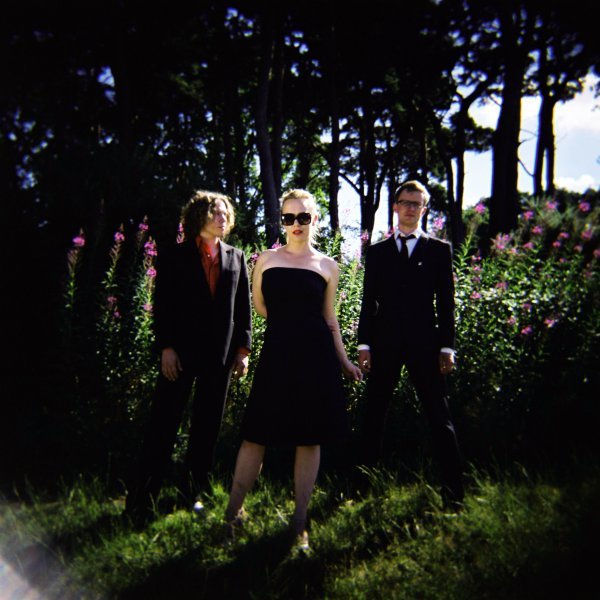
Three Londoners met in the market one fateful day: Kathrin deBoer (vocals), Ricky Fabulous (guitar) and DJ Modest (decks) struck up a conversation and soon realized they had similar musical tastes. Ricky and Modest, who played experimental turntable and guitar sets in London bars, auditioned deBoer over a cup of tea and Belleruche was born. Now with numerous singles, three albums and non-stop touring behind them, Belleruche are well-established in Europe, Australia, New Zealand and are poised to take on America.
Things began humbly enough for the band. Initially, they released a handful of extremely limited 7” records on their own Hippoflex label, including the ‘Four Songs EP’. These individually numbered 45’s (with hand-printed sleeves) quickly sold out in the UK’s independent record stores and attracted a cult following in the UK and Europe.
With the buzz generated by these singles, in 2007 Belleruche signed to Tru Thoughts Recordings and their debut album ‘Turntable Soul Music’ was released in July of that year to great enthusiasm from fans and the media alike, garnering admiring reviews both at home and abroad. Belleruche’s second, more bluesy sophomore album “The Express” thrilled its fanbase while also bringing them to the wider world’s attention and garnering many listeners. The first single “Anything You Want (Not That)” was awarded the coveted Single Of The Week spot on iTunes and the album hit Number One in the iTunes electronic album chart.
With their third full length now reaching audiences new and old, ‘270 Stories’ sees the trio hitting their stride with style, tying together all that is distinctive about their off-kilter mix-up of scratchy beats, bluesy guitar and soulful, honeycomb vocals that we know and love, with the unmistakable vibe of a band pushing forward without pretension, letting their ideas roam free and lead them to a new place. In their own words it is “layered, tougher, more aggressive and possibly at the same time more introspective” than their previous, highly acclaimed, long players.
Kathrin deBoer ups the ante with multi-layered harmonies that see her skirting the line between sugary and spiky, with a distinctly doo-wop style making an appearance on some tracks. In addition to his unique, bluesy lead stylings, guitarist Ricky Fabulous plays a lot more bass on this album, which makes for a dynamic and irresistible melodic interplay between basslines and vocals. More new and exciting sonic surprises include tougher edged beats from turntablist DJ Modest, exploring darker, contemporary influences; all this alongside more rigorous attention to song arrangements and form, harnessing the beautifully dishevelled, charmingly chaotic energy of their music for a powerful result.
Belleruche have played a range of festival dates at home and abroad, including Glastonbury and the Montreux Jazz Festival, where they struck up an impromptu jam with The Raconteurs and Vampire Weekend that was reportedly one of the highlights of the festival. The trio have developed a new live show to match the new developments of “270 Stories”: “We’re playing new stuff in new ways: Ricky is playing bass on stage now for some songs, Kathrin’s using loopers and guitar delay pedals and Modest is using Abelton and loads of new things he doesn’t really understand.” With a great reputation already for their live performances, these new developments – described in characteristic self-effacing style – are set to add another level of intrigue. Look out for headline album tours of the UK, Europe and North America later this year, but first you can catch them at a host of major festivals this summer, including the Secret Garden Party, Bestival and the Big Chill.
Mundovibe Editor John C. Tripp caught up with the extremely affable and good humored Kathrin deBoer over Skype and a cup of tea to discuss the band’s influences, inspirations and what to expect from their tour for “270 Stories”.
MundoVibe: You’ve been compared to, to some degree, Portishead or the like. I don’t want to start by drawing comparisons; I’m talking more about traditions. Your music taps into the blues but it’s also modern, so you’re carrying forth a certain state of mind and music. It’s interesting how you’ve done that.
Kathrin deBoer: I think it probably helps that all of us have come from very different backgrounds. DJ Modest comes very much from a hip hop background and soul and funk. Ricky Fabulous is definitely involved in hip hop but not to the degree of DJ Modest. He was into all kinds of music, a lot of gypsy jazz—Django Reindhart’s his idol. And then I came from a jazz background, so it’s inevitable just because of the setup that comparisons would be drawn to trip hop artists. But, out of all of us we didn’t actually get into the era when it was popular in 2002. It just wasn’t our thing, we were listening to funk and soul and obscure hip hop records, so it’s interesting and I don’t think it’s actually such a bad thing drawing comparisons, it’s an entry point to understand what you’re trying to do. But then they need to keep an open mind to what’s actually there as well. Because I don’t think we sound like Portishead at all. Yes, there’s some heavy beats and there’s a female vocalist but I think that’s where the comparisons should be left and move onto something a little bit more open. It’s very hard for us to be able to describe our music because we’re just playing or creating or making what we feel we enjoy or what feels good to us. So, there isn’t this “oh, we need to make it a certain style of music, or we need to make trip hop or blues music”, it’s just what we feel, we quite hedonistic that way it seems.
MV: You’re onto your third album so you’re quite seasoned. You’ve been on the live circuit and you’re very much an established band as opposed to just a project.
KD: Oh gosh yeah. Our live show started off being a jam session in a bar in Islington and from there it just grew. It’s just a natural progression and evolution that we’ve come from that place to doing full shows. And for our album launch, which is here in London, we’ve invited some other musicians to come and join us. Which is the first time we’ve felt we needed to because everything grew in the studio: our music and the sounds grew so to do some of those tunes live it’s a perfect opportunity to bring some other people in.
MV: I’ve noticed in “Clockwatching”, your first single, it’s got that driving bassline and from the press release you’ve got a bass guitarist that’s joining you.
KD: Well, we were meant to have a double bass player come and join us but the lady that we were hoping to get, she got double booked so she won’t be able to do ours. It turned out that I needed to learn the bass pretty quick so we went and bought one last week, I’d been using Ricki’s bass, so I’ve been learning for a month. So, one of the tracks I’ll be able to play.
MV: That should be interesting.
KD: (laughs). It should be very interesting. Ricky’s been very kind and he’s arranged the track quite easily for me because I’ve never played bass but it should be fun.
MV: Well, you know Tina Weymouth of the Talking Heads didn’t know how to play the bass and they were a band.
KD: Hmm, I’m sure those comparisons will be made straight away because we’ve been learning for three weeks. But it’s fun, it’s great that music makes you do things that you never thought you would do and it just makes you a bit more adventurous.
MV: And you clearly have fun with it.
KD: Yeah, it’s got to be. Otherwise it’s not really what you should be doing. I think music is one of those things that needs to be fun, otherwise what’s the point? You’re making music to make other people feel good as well as yourself so if one of those things don’t really work I don’t really see the point. It needs to be enjoyable, the creative process needs to be enjoyable.
MV: Talking about how your music might affect people, a lot of your lyrics and your subject matter seem to be around personal or human issues. There’s a lot of “we” or “me” in there or “I” and of course the question would be are these your experiences or observations and where does this material come from?
KD: I think it’s both really, it’s from personal experience but also from observations. Perhaps I’m a little bit lazy but I’ll make something first person if it’s, say, something happening to a friend. Yeah, I’ve tried to get out of that “you” and “we” and “me” and all of that kind of vocabulary, which I think I’ve achieved a few times but I must say that I find it easier to write things in first person. But things like “Ginger Wine”, I do think I mention “we” in there – “I’m the stranger one can trust” – but it’s more metaphorical really. There’s a musician called Mulatu Astatke who I got to know last summer and we went out for dinner and he told me these wonderfull ridiculous stories about him playing all over the world and travelling by ship to all of these cities and him playing with Duke Ellington and these sorts of things. Somehow I felt very poetic, so ‘Ginger Wine’ was a product of just meeting and getting to know Mulatu.
MV: Yeah, he’s a legend.
KD: He’s a bit of a legend (laughs). He’s a lovely human being and he’s very enthusiastic and he’s not the youngest of musicians that is touring but he manages just so well and I think it is just because he enjoys it so much and he still enjoys the creative process. I don’t think in any way he’s become complacent or he says “I’ve done what I needed to do”. He just continues to try and do something different and I think that’s admirable. He’s been in the industry for a good part of his life.
So, lyrically, I suppose a lot of it’s personal but inspiration comes from many different things, it could be just observations or watching people on a bus or in a café but they’re all different.
MV: The three of you have quite an interplay in your music, it’s a completely unified sound. How on earth do you all come together to do this?
KD: I think that comes down to the amount of time we spend together and starting from the basics, starting from the bottom. Ricky always knew how to play the guitar but all of us kind of understanding our roles and I think all of us respecting each other and what each of us bring into the group. That underpins the fact that there’s always room for each of us to say something or do something and that comes out musically I suppose.
MV: Let’s go into “270 Stories” and you’ve got 11 tracks on there, everything from ‘Clockwatching’ the first single to a song called ‘Churro’ which is a delicious little dessert.
KD: (laughs) We eat them in France a lot, tastey and fatty. Yes, churros have got us through many a good gig.
MV: How would you describe “270 Stories”?
KD: Oh God, that’s really hard. Turntable soul music, and it’s just a progression from what we’ve done before. It’s just a bit harder and better, as in better produced. And we’ve all learned how to use certain bits and pieces that make music (laughs). Yeah, we’ve all gotten better at it. So, to describe it I’d say it’s still turntable soul music and within that it’s too hard for me to deconstruct it and define it as blues, soul, funk, jazz, hip hop: it’s all in there.
MV: Again, you’re probably taking your backgrounds and coming together. The Django Rheinhart of Ricky and the hip hop of DJ Modest and your jazz background. You know, I’m quite amazed at how you all met, it seems quite fateful, I’m sure you look back on it in that way.
KD: Yeah, theres’s these small things that happen that change your life and direct you in certain ways but it’s always about choices isn’t it? You make a choice every day to do certain things or to be in certain places, which you get to meet certain people. That’s the fun of it.
MV: Have you performed in the United States or is this going to be the next touring area?
KD: Belleruche hasn’t performed in the United States yet but we’re just hoping the visas will get through and then we’ve already got some shows booked in but of course that’s pending on the visa issue. But I came there a couple years ago and played with the Giant Step people, with Nickodemus and Nappy G on the 4th of July and at Water Taxi Beach.
MV: Turntables on the Hudson?
KD: That’s the one, yeah.
MV: I know Nickodemus, he’s a good guy.
KD: Yeah, he’s lovely. But that was pretty much off the record. But we’re really looking forward to it, it will be so interesting because people have made comments that sometimes our music sounds a little American, as in inspiration.
MV: I read that you have a new studio that you recorded “270 Stories” in, is that right? Called the basement.
KD: Yeah, well it was a basement and now it’s been all packed up because DJ Modest has left that place. It was kind of a massive space where you could ride your bicycle in the front, and that was their living room. And then in the front underneath the street and there was the studio and it was brilliant and I think it really shaped the sound of the album because we had a specific space which was just for writing music and a space where when we went there was like ‘now I’ve got to get to work’. Because beforehand we just recorded wherever we could, which had been people’s spare rooms. That definitely wasn’t set up for recording music. We did our best, trying to make rooms sound quite dead and put blankets up and DJ Modest did construct a few wooden, kind of strange looking apparatuses to hang things over to try and work but that part was really, really fun but not sustainable. We wanted to step up the sound and we wanted to do the best thing we could. So, having that setup, that subterranean studio was fantastic, it really helped.
MV: And you’re still in control of everything, in terms of the production and the final mixing?
KD: Yeah, we’ve kept that always in-house and that’s always been ours. DJ Modest does a lot of the production work but we all agree on the final sound. He has a lot of patience with these sorts of things – I have to say that I don’t have that much patience for tuning a kettle drum over a couple of hours, that sounds like torture (laughs). But unfortunately we don’t have that studio anymore, but we’re all geared up for touring anyhow.
MV: You certainly have a busy schedule.
KD: Yeah, it is! You get a spare moment and you think ‘Oh, I should be doing something’. Yeah, we’ve got a great tour in France, the U.K. and coming to America, I think that works out nicely with the visas as I said and after that we’ll take a month off for Christmas and family stuff and then start again in Australia and New Zealand and then America, hopefully for South by Southwest. And then, yeah, Switzerland, Germany and back to France.
MV: The three of you must have a good understanding of one another to tour so much, and create music . What’s the dynamic of the three of you?
KD: The dynamic (laughs), I think that would be different for each of us. I think we all give each other enough space and we know the signs when someone’s a bit either pissed off or needs their space. So, that’s easy to do, because there’s three of us you know? That one person can go off and do whatever they want for a bit and the other two don’t get lonely or whatever (laughs). With three people I think the dynamic is I suppose quite easy.
MV: That’s good.
KD: But we genuinely like each other as people as well and that helps as well.
MV: And you’re kind of in a good family with the Tru Thoughts people. They have clearly embraced you and you’re growing with them, which these days is kind of rare.
KD: I think so because a lot of record companies want you to do certain things or they have their vision of what you should be. When we started up I think we were quite strong in defining who we were, which as just us you know? We’ve had people say, ‘why don’t you get a drummer?’ and a bass player and ‘you need a string section’ or whatever. But that’s not the point, the point is we have a sort of do it yourself kind of sound. And Tru Thoughts, they were quite happy to endulge us in that. So, we’ve been very very lucky that when we’ve given them music they’ve like it and we’ve not had to go back and change anything. I don’t think that’s how they operate either. So, yeah, we’ve had freedom to do what we’ve wanted to do musically and I think that’s quite lucky. But I think that’s also why we chose an independent label to sign to because you do have a relationship with the people putting your music out and getting it around the world.
MV: Now, you’re already at a certain level of success and of course there’s always that “next”. What would be that next that would be something you’d shoot for?
KD: (laughs) Oh yeah, those plans. I think we’ve been in the business long enough to realize that it doesn’t matter what you plan or which you think, you’ve just got to take what comes. So, on a short term I’d love to be invited to play at the Montreux Jazz Festival again just because it’s an amazing institution and they invited us previously and we thought ‘oh, maybe they got the wrong band?’ but apparently they hadn’t. I think being invited back to a place like Montreux Jazz Festival, that would be really really cool. I think being able to get to a point where you have a few more choices as in, you want to do a tour and you can do that sustainably and so we would be able to dictate ‘well we’ll be taking the train instead of airplanes’ so we’ll need to have a day off there. And for that to be economically feasible so we could do it the way we like to do it. That would be a great luxury. But to keep making music – we’ll just see how it goes. I don’t like to put money into the equation but it is a fact of life that you need to be able to live and with digital down loads and the movement of music I think touring is the way that you need to be able to secure that.
MV: You know who comes here to the States on tour quite frequently is the New Mastersounds. Are you familiar with their music? It seems like they’re here touring constantly.
KD: Working hard (laughs).
MV: Yeah, getting out there with their music and they’ve been embraced here. I guess the reason I brought them up is because I would hope that you would be touring here in the States on a regular basis in the future.
KD: That would be amazing, it’s such an enormous country, that would be brilliant. I’d love that. It’s an enormous country and the States are so different and people are so different. It’d just be amazing if we could.
MV: But as of now I know that you’re very popular in Europe and particularly in France.
KD: Yeah, France it’s key for us. I think it’s grown that way because early on we had radio support. National radio like FIP and NOVA. I think it’s still very powerful being on the radio. We had some radio play, we’ve had a lot more radio play for this album already – we’ve had early support in the UK again in France and Switzerland. I think that’s still very much a key part of being able to tour in places if you have that radio support.
MV: You actually had support here in the States with public radio with a Song, I think, of the Week?
MV: You mentioned the digital downloads and the fact that everything is so digital and online – is that something you are actively involved in? Because you’ve got podcasts that I listened to – and that’s cool to listen to and it sort of brings people into your mindset.
KD: Into our little world.
MV: Yeah, the chocolate and beer and podcasts.
KD: (laughs) Our favorite things, yeah. Digital communication is fantastic. To be able to hear music that someone’s made in their bedroom, you know, a couple days after it’s been made and for that to have the potential distribution around the world – that’s awesome.
MV: Do you ever feel that you always have to be on it – on Facebook – or are you all kind of distanced from all that to some degree?
KD: To some degree we’re not as proactive as a lot of bands. It’s just because we like to do other things like make music. We self manage at the moment so there’s a lot of other things to deal with. So, we try to keep on top of it with Facebook and Twitter. And, as anybody who follows us on these knows, we’re not that good at it (laughs), because we’re just busy doing other things. We do try but we’re definitely not that active. We have been told we should be more but it’s all of that balancing of stuff. I just think it’s a brilliant resource and it’s available to everyone – it’s a good thing to be involved in.
MV: You live in London and London is clearly a big inspiration for you, a big part of your lives. How does that filter into what you’re doing with your music?
KD: There’s always something to do in London and there’s always something to hear. If you feel – I don’t get bored but if you do feel ‘oh, I want to be inspired’ all you have to do is leave your front door and just go wander about and meet up with some friends and go to the pub and it’s more than likely that you’ve got a band playing in the corner of that pub that’s starting out or they could well be people like Kit Downes you know, just playing in the pub with some mates (laughs). It’s just a constant source of inspiration that way, it’s quite humbling as well that people that have won enormous prizes are just at the pub with their mates and playing for the pleasure of playing and experimentation. London does encompass experimental music and because it’s so populated, there’s just so many people that live here the concentration of musicians that are ‘just hanging around’ (laughs) is quite big. I suppose it’s the same in New York that way.
MV: Yeah, it is to some degree. Although I think London’s more of that. You know I’ve never been to London (any sponsors out there? –Ed.) so I can’t draw too many comparisons but I have lived in New York. I was just in New York for a month and it seems like New York is more commercially oriented – everything is about paying the ‘cover charge’.
KD: Ahh, OK, I suppose that does creep in. In London no one really feels as though they want to pay for music, to hear live music so for the artists it’s not a very lucrative place to be but for the punter they rule (laughs).
MV: Are you looking forward to performing in, say, New Orleans? I can see you at some smoky bar there.
KD: Yeah, that would be amazing (laughs). If we were invited to New Orleans we probably wouldn’t say no. Would love to, there and New York. Over the last few months we’ve gotten to know a few people and I’m very much looking forward to meeting the people we’ve been working with to make the tour happen. And just to understand why they’re so lovely to work with. I think it’s all about people at the end of the day isn’t it – the people of the city. We’re very much looking forward to getting out and seeing as much as we can and experience as much as we can on the road.
Join Belleruche on an intriguing guided tour of the London bars, venues and other locations that informed the creation of ’270 Stories’, interspersed with music from the record.
FREE SONGS BY BELLERUCHE
Download a free track from Belleruche’s forthcoming album at http://amzn.to/auHvX5 (USA only)
One of the most influential underground music producers and DJs of the past decade has called it quits. Here’s his letter:
The End
It’s over. I can’t go into the personal reasons, but of course will leave you some explanation as to how I got here. It feels a bit like walking away from a life of crime or the Mafia. I am Carlito, I have finally made the break from the old dangerous way of making a living. I just hope Benny from the Bronx doesn’t shoot me as I am boarding the last train out of here. The point is that I am no longer Domu. He is a character, always has been, and as of Friday 13th November 2009, he no longer exists. Neither does Umod, Sonar Circle, Bakura, Yotoko, Rima, Zoltar, Blue Monkeys, Realside or any of the other names I put out music under. I am cancelling all my gigs and not taking any more. My hotmail is closed, my Twitter is closed and my Facebook is closed. If any of you want to talk to me and know me well enough to have my mobile number then that is still the same, and please feel free to call any time. My other email address I mail from occasionally is still open to tie up any loose ends.
I had started to change, for the worse I am now sure. My confusion was growing, my insecurity and bitterness getting out of hand, a lack of creative direction and focus were leading me somewhere very dark. I have felt so depressed by all of this. Believe me I have searched my soul long and hard this year to find the reasons again why I do this, but I can’t locate them. Too much of ‘me’ is mixed up into all of this, and no one should ever give so much of himself or herself to a job. I once believed in all of it, that I made and played music for a certain type of person, for people who didn’t want to adhere to the ‘normal’ way of life, the free thinker, the independent or open minded type who was bored of the genres, the staples, the blueprints or the formulae. The underground. But I just don’t truly believe I am needed in this battle anymore. It has been passed down to another generation, who are doing it their way, and I have no desire to try and edge in and start proclaiming to be fighting a fight that is no longer mine. I am a 31-year-old man. I can’t claim to be holding a torch up to something that meant so much to me at 15. At 21, maybe. But now, after ten years going full time, I think I have said all I had to say. My creative light has dimmed. Maybe because I started so early, who can tell? But I feel satisfied that this is it.
This affair began with Weston’s role as a DJ back in his teens, almost by default: as any record collector knows, if you’ve got the biggest collection, you are the DJ. It was in 1995 with the monthly jazz/hip-hop event “Phony” at Ormonds in West London that Weston’s professional career gained steam. From there he and partners Mikkel Togsverd and Marlon Celestine, along with guest DJs from Japan, launched “Mukatsuku”, a highly regarded jazz and hip hop night at the Clinic which ran for 18 months. Until May of this year Weston held a weekly residence at “Bite Your Granny” and currently spins monthly at Russ Dewbury’s Brighton Jazz Rooms. Weston has also toured extensively, with gigs in Russia, across Europe, Australia and regular appearances in Japan including a full tour with Victor Davies in September 2001. DJing is hat one—hat two is Weston’s role as a publicist and compiler of underground sounds. Weston’s involvement in this realm includes a five year stint a Island Blue, and for the past 3 years he’s been principle at Mukatsuku PR, as well as being the A&R man for Exceptional Records. Weston’s compilations of music, with a bent towards Japan, includes Jazztronik’s ‘Inner Flight’, ‘Moshi Moshi – Nu sounds from Japan’ and and his latest, “Sakura Aural Bliss” an excursion into jazz, ambient, and deep house from artists like U.F.O., Calm and Takayuki Shiraishi.
A recent project of is the radio program “FORWARDSBACKWARDS” on milkaudio.com, co-hosted with Nigel Prankster.The twice monthly show features a broad spectrum of music from cutting edge nu jazz to brazilian, funk and jazz. We recently caught up with Nik, who took some time to give Mundovibes a peep at what keeps him running…
You wear many hats: DJ, publicist, radio show host, journalist. How do you manage to do all of this?
Well…in a former life i was an octopus! I think the main thing is that is that it’s my first love of music that drives me on, gets me out of bed in the morning and having an actual office rather than working from home and its obvious distractions is a help.There’s a domino effect in this business and so all my jobs in some way are loosely connected.You do one thing and it tends to lead onto something else. I also work long hours which helps me fit it in. I have a very undertstanding girlfriend which also helps.
Music is clearly your inspiration…
i think there’s nothing really like it. Someone I know was talking about his realtionship with his girlfriend; she was saying ‘you love music more than you love me!’ And he was like, girlfriends come and go but I’ll always have Stevie Wonder! Music has a great ability to seep into your pores and set off all kinds of emotions, flashbacks and feelings. Live music as well affects you like no other medium. I went to see Da Lata’s awesome live show at the Jazz Cafe in London a few weeks ago and they did a live version of ‘Pra Manha’. I turned around to my girlfriend and she had tears streaming down her face. I was like you okay? And she said ‘yeah, I’m just so happy !!’ I was buzzing because of the gig but to see music affecting my girlfriend like that brought home that there really is nothing like it and especially a live performance of a great gig. No drugs, no alcohol, just great music.
Is music the most important thing for you?
Well, it’s been my occupation for the last 8 years and all my time is spent in some way related to music. Most of my friends are in the industry and any free time is seeing djs, bands or djing myself. I think it’s important to have other interests as well but I’m the first to admit I’m a tad slack in this area. I do enjoy good food and travelling.Being lucky enough to dj overseas helps me do this—visit other countries, go exploring before the dj gigs albeit for short amounts of time. I hate turning up somewhere, djing and then getting the next flight home. If I can I’ll go early so I can chill out a bit in the local surroundings.
You’ve been DJing for some two decades. How has this evolved over the years in terms of how you choose music, the venues in which you spin and the audiences?
Well I think the audiences before were much more specialised.You had venues just playing one kind of music. But nowadays people get bored (and rightly so) with one style all night. I try and find out a little about the venue—what works, what doesn’t from the resident dj and then pack my box accordingly. I think what we have to remember first and foremost is that we are entertainers—we are paid to entertain. If people aren’t dancing then I’m not going to have a good time and neither are the crowd and the promoter isnt gonna be happy ! We can get all pretentious about it by bragging we’ve got all the latest tunes, but at the end of the day if there’s an empty dancefloor then it’s obviously not gonna work.Primarily I’d say 70% of the music should be entertaining and maybe 30% a gentle education into things that the crowd might not have heard before but still works in this context.
What is your typical DJ set like?
Depends really on many factors, but it would incorporate hip hop, jazz, brazilian and going into newer stuff as the set progresses and maybe into boogie and nu jazz.Throwing a few ‘oo i love this’ classics alongside some electronic nu jazz curve balls.
How do “old-school” DJs differ from today’s young crop?
Personally im not into djs who mix seamlessly but their sets are uninspired because they have to maintain a like for like tempo. I read a piece by Ashley Beadle (x press 2) recently who said he’d rather listen to someone DJ as a selector (playing solid good tunes than someone who was technically
brilliant). I’d like to see myself as a tune selector. A set of mine would comprise many different styles and tempo’s for example.
You host an international radio program, ForwardsBackwards. What is the concept behind it?
Well the feedback so far has been really great—quite overwhelming actually. The idea of the show is to not feel constraints from music styles or time zones.We might play a rare jazz track from early 60’s alongside a broken beat track made that day from an ‘up & coming’ producer, hence the name ‘Forwardsbackwards’. The show is very varied musically. Both myself and Nigel Prankster (co-host)have stupidly large record collections and obviously you can play stuff on a radio show which you wouldnt neccessarily be able to play in a club setting. I also have a section in the show where I play music only traditionally available in Japan. That could be productions from western artists that only came out there to home grown japanese talent.Because of the many reasons Japanese music is often only ever heard within Japan. We try to redress this (if only slightly) imbalance.
You seem to have a strong connection with the Japanese music scene. What is the scene like in Japan and how are you involved with it?
Well, I’ve released 5 compilations for various labels so far,four of which have been exclusively japanese only material with the fifth one having 5 Japanese tracks on it. I got into it in 1995 running club nights with regular Japanese dj guests. I’m involved with the scene nowadays in as much as I do consultancy for japanese labels and promote japanese music in europe. I run the uk office by Osaka based Especial Records (run by Yoshihiro Okino from Kyoto Jazz Massive )and I A&R for Exceptional records, where we’ve released music for the label from Japanese artists such as Ken Ishii, Calm, Force of Nature, United Future Organisation, Takkyu Ishino, and dj Krush.The scene is very difficult in Japan at the moment: hip hop and r & b are very popular, as is progressive house and sales of brazilian music and nu jazz are falling which is not a good thing.
What are your favorite things about Japan?
Food for a starters. I was djing with Gilles Peterson in France last month and he’d just come back from japan. He told me he had had dinner with Tosio Matsuura and they had together the best meal they’d ever had in Japan. Food culture there is very different to any other culture I’ve ever come across.people get very excited there about food.its a national obsession like the weather is with us English ! Other than that I find Japan facinating. I’m going to visit my future inlaws in January and her parents are from a place called Kumamoto in the countryside. Her mum has never met anyone who wasn’t from Japan so that’s gonna be kind of mad.
What is the ideal setting for your DJ sets? Any events in particular that you hold in high regard?
I did a Brazil night tour with Compost artist Victor Davies in Japan three years ago. Every gig was wicked: the crowds very responsive and the sound systems in the clubs was great. There’s a great night called “Wahoo” in Finland which is always great. The firsttime I played there, it was full by 9pm and 90% were girls! Saying that the Jazz Rooms in Brighton is always killer—crowd goes bonkers cheering after every track. I love playing there.
What is your opinion on the current state of music? Where is it all going?
We need to find ways of geting the young kids into music (whatever style—all styles! ) as these kids will be our audience for the next 10 years or so.
Do you have any favorite clubs in London and elsewhere and what makes them special?
PLASTIC PEOPLE: great system, nice size (200) and great music.
What impact has the internet had on promoting music? Is it more global now?
You betcha. The internet has opened up so many doors. I only hope it helps sales rather than kill it.
What is your advice to new labels on how to promote a recording?
Give it 110%. Promote it properly, exhaust all possibilities and all mediums in its promotion oportunities.It’s no good putting out music which is ”just alright”—people aren’t stupid. Only put music out you believe in that you would buy yourself.
You’ve selected the music for number of great compilations, including ‘Music & Movement Vol 1’, ‘Moshi Moshi’, and your latest ‘Sakura Aural Bliss’. How do you go about selecting tracks and is what is the common thread with these compilations?
When I put the compilations together they all tend to start off slow, build, peak and then come down again rather like a dj set from the beginning of a night to ends end, but obviously compressed. I’ve not regretted putting any track on a compilation so far and I’ve been lucky to have worked with great people who have believed in what I was doing and supported me in this and letting me keep certain tracks in which may have not been so well known. All the compilations have had very good reviews and I regularly get e-mails from people who’ve just recently discovered them or gone back to them with positive comments. It’s things like that that make me know that hopefully I’m doing something right. I’m realistic to know that the credit should actually go to the producers. I have a very small part to play—without the producers you wouldn’t have these compilations. Respects to them.
Who are some artists we should be looking out for?
Swell Session from Sweden is doing some awe inspired productions. He’s just finished a mix for me on Fat Jon for exceptional that’s killer! There’s a great project from Neo Groove from Leroy and Marcus Begg which should come out early next year. There’s actually tonnes of great music coming out: check Raw Deal’s new lp on Straight Ahead (Switzerland) next year too.
What is the best thing about what you do?
Hoping that with my involvement that artists and certain types of music gets better exposure which helps us all in the future. I still get extremely excited about music.
What is on the horizon—new projects, places you want to DJ, etc.
I’m back to Japan in January to DJ and do promotion and interviews around the “Sakura Aural Bliss” album with the Japanese distributor. In february I’m playing in France, Sweden and Denmark and then my first proper tour in Australia looks like to happen in the spring.
Ten records everyone should have in their collection?
1.stevie wonder – songs in the key of life
2.dj mitsu the beats -new awakening-planet groove
3.calm -ancient future -lastrum/music conception
4.context – if i had a band -sonny b
5.sleepwalker -sleepwalker -especial
6.various -sakura aural bliss-kriztal
7.fat jon -lightweight heavy -exceptional
8.calm – introducing the shadow of the earth -exceptional
9.various -an intruduction to contempory nordic music -nordic lounge 2 -dnm
10.anything with marvin gaye/curtis mayfield/yukimi nagano/bless/swell session on it.
An exclusive Mundovibe interview with Tortured Soul
Interview by J.C. Tripp
Rose and violet lights fall on three musicians decked out sleekly in skinny ties, pressed slacks, and starched white shirts. The mass of bodies gathered before them pulsates with a unified enthusiasm. Sweet soulful vocals rise from the man in the middle, an effect rendered all the more captivating by the fact that he is concurrently beating out an unrelenting backbeat on the drums. Flanking him on either side are a bassist who jumps up and down to the rhythm as he generates the throbbing low-end, and a keyboardist whose cool composure belies the fire in his fingers. This is Tortured Soul.
Born of the simple yet adventurous belief that modern dance music can be performed completely live, Brooklyn’s Tortured Soul packs dance floors with their unique live performances, while their recorded oeuvre pushes the genre boundaries of soul, dance, and pop. Born from the rhythm section of jazz-funk band Topaz, Tortured Soul began touring in 2003, and have become one of the premier live dance acts of this generation. While touring every continent, they have played venues as diverse as the Montreal Jazz Festival, Zouk Singapore, Bonnaroo in Tennessee, Fabric in London, and The Capetown International Jazz Festival in South Africa. They have shared the stage with world renowned DJ’s like Carl Cox, Miguel Migs, Jazzanova, and Louie Vega. They have also performed with many legendary live acts such as Chaka Kahn, The Wailers, The Brand New Heavies, and Pharcyde.
Tortured Soul has blazed an amazingly uncommon trail through the world of modern music. Following the early success of their now-classic dance singles “I Might Do Something Wrong,” “Fall In Love” and “How’s Your Life” in 2001 and 2002, Tortured Soul formed officially as a live band and booked their first nationwide tour in 2003, often playing in club settings that had never before seen a live act perform dance music so seamlessly. With the devotion of club-goers and DJs cemented as their foundation. Today, after 5 years of touring and a reputation for a live show nothing short of legendary, they are perhaps the only band in the world that can rock the main room at Fabric (London) at peak hour, as well as a 15,000+ festival crowd at the Montreal International Jazz Festival.
Combining elements of old soul and funk with a modern dancefloor sensibility, Tortured Soul’s style is both an echo of the past and a challenge to the future. This blend of sounds has won them praise from palettes as diverse as Lenny Kravitz and Barry Manilow, and made them a fave pick of DJ’s across many genres. Their tracks have received remix treatment from such luminaries as Osunlade, DJ Spinna, Alix Alvarez, Quentin Harris and Dimitri from Paris among others, and have appeared on over 25 compilations by the most prominent dance labels, from Hed Kandi to Defected – a testament to the impact they’ve had on current dance music.
2006 saw the release of their highly lauded first full-length album “Introducing Tortured Soul,” (Purpose Records / R2 Records) which collected their early 12” singles with some new studio gems, and fans around the world have been waiting with baited breath for the sophomore effort ever since. In early 2009 Tortured Soul released their new album “Did You Miss Me” on the band’s own newly formed TSTC Records (Dome UK/Europe, Columbia Japan). Previewed for fans with the 3-song/1-remix “In Transit EP” in Spring ’08, “Did You Miss Me” picks right up where “Introducing” left off. As it winds its way through infectious disco grooves, heartfelt raw soul, and lyrical themes that range from melancholic love, infidelity, and party-going mirth, the album coheres as the group’s most accessibly diverse effort to date.